Biography
About Cillian Murphy
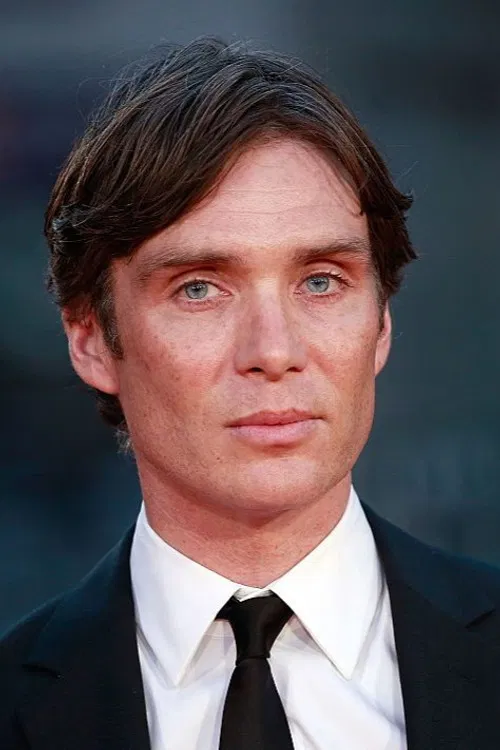
Cillian Murphy has built a career around concentration: the watchful pause, the controlled voice and the sense that something restless is moving beneath the surface. Born in Douglas, Cork, on 25 May 1976, the Irish actor first imagined a life in music. He began writing and performing songs at 10, later singing and playing guitar in bands with his brother Páidi. Law studies at University College Cork proved a poor fit, while theatre offered the charge he had been looking for.
Murphy made his professional stage debut in 1996 as a volatile Cork teenager in Enda Walsh’s Disco Pigs. The production’s two-year international tour pulled him away from university and music, establishing a stage career that would remain important even as film and television brought him to a much wider audience. His lead role as Jim, a survivor waking into an emptied London in Danny Boyle’s 28 Days Later, became his major screen breakthrough.
What followed showed an actor resistant to one fixed type. He could play the menacing Dr. Jonathan Crane, also known as Scarecrow, in Christopher Nolan’s Batman trilogy, then bring warmth and searching vulnerability to Patrick “Kitten” Braden in Breakfast on Pluto. In The Wind That Shakes the Barley, he played Damien O’Donovan, a young doctor drawn into the Irish revolutionary struggle. Sunshine, Inception, Dunkirk and A Quiet Place Part II further demonstrated how effectively Murphy can hold the screen without overselling a moment.
Television gave him one of his richest long-form roles as Thomas Shelby in Peaky Blinders, beginning in 2013. A decade later, he took the lead in Nolan’s Oppenheimer, portraying physicist J. Robert Oppenheimer. The performance won him the Academy Award, BAFTA and Golden Globe for Best Actor, making him the first Irish-born performer to win the Academy Award in that category.
Across theatre, film, television and music, Murphy’s work has retained the same intriguing tension: restraint on the surface, pressure underneath.