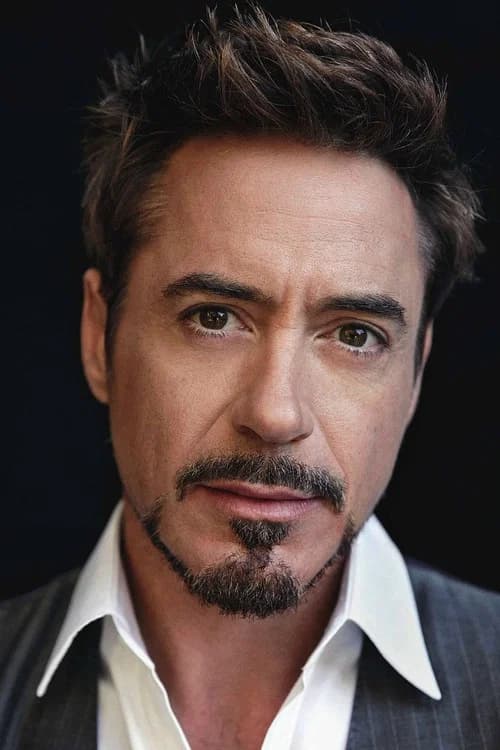
Biography
About Robert Downey Jr.
Robert Downey Jr. has built a career on quick intelligence, restless energy, and the ability to make even highly controlled characters feel dangerously spontaneous. Born in Manhattan on April 4, 1965, he entered movies early, appearing at five in his father’s absurdist comedy Pound. By the 1980s, he often played misfits and punk-like figures, with Weird Science providing a breakthrough and Less than Zero bringing critical acclaim for a darker, more exposed performance.
His transformation into Charlie Chaplin for 1992’s Chaplin demonstrated the preparation beneath that looseness. Downey learned violin, practised tennis left-handed and worked to reproduce Chaplin’s accent and physical mannerisms. The performance won him a BAFTA and brought his first Academy Award nomination. Heart and Souls, Only You and Natural Born Killers subsequently showed different sides of his comic timing and physicality.
A long period of addiction, arrests, treatment and professional setbacks disrupted that momentum. His return gathered force through The Singing Detective, Kiss Kiss Bang Bang, A Scanner Darkly and Zodiac—films that made particularly good use of his fast delivery, vulnerability and talent for playing men whose confidence is never quite as secure as it appears.
Iron Man turned those qualities into the foundation of a global blockbuster character. As Tony Stark, Downey combined arrogance, humour and damage across the Marvel films from Iron Man through Avengers: Endgame. During the same period, he earned another Academy Award nomination for the audacious Hollywood satire Tropic Thunder and brought his kinetic approach to the title role in Sherlock Holmes, winning a Golden Globe for the performance.
Christopher Nolan’s Oppenheimer offered a striking change of temperature. As Lewis Strauss, Downey traded the expansive charm associated with many of his best-known roles for restraint, calculation and resentment. The performance earned him the Academy Award, BAFTA, Golden Globe, Screen Actors Guild Award and Critics’ Choice Award for Best Supporting Actor. His later work has continued to move between formats, including multiple roles in HBO’s The Sympathizer and his Broadway debut in McNeal. It is a career defined not by one comeback or one franchise, but by a persistent appetite for reinvention.