The Conspirator
“A nation wants justice. One lawyer must decide whether justice is what it's getting.”
Director
Robert Redford
Release
1 July 2011
Runtime
122 Minutes
Certificate
12A
Synopsis
On 14 April 1865, President Abraham Lincoln was assassinated by John Wilkes Booth. The killing comes just days after the effective end of the American Civil War, throwing a wounded nation back into chaos. Authorities launch an enormous search. Seven men and one woman are arrested and accused of involvement in a wider conspiracy targeting Lincoln, Vice President Andrew Johnson and Secretary of State William Seward. The woman is Mary Surratt. Her Washington boarding house had been used as a meeting place by Booth and others involved in the conspiracy. That connection is enough to place Mary at the centre of the government's case. Frederick Aiken is assigned to help defend her. He's a former Union officer who fought for the country whose president has just been murdered. Defending somebody accused of helping Lincoln's killers is hardly a role he welcomes. Yet a defence lawyer doesn't have the luxury of deciding that somebody is guilty before examining the evidence. As Aiken begins investigating, his attitude towards Mary changes. Questions emerge over what she actually knew. Witness testimony becomes crucial. Political pressure surrounds the proceedings. Instead of facing an ordinary civilian court, Mary is tried before a military tribunal. Meanwhile, one important figure remains beyond the government's reach. Mary's son, John Surratt. He is suspected of involvement in the conspiracy but has escaped the massive search for those responsible. Aiken increasingly believes Mary's prosecution is connected to the authorities' determination to capture him. But proving doubt in a courtroom is one thing. Convincing a traumatised nation to tolerate that doubt is something else entirely. Public opinion has already turned against Mary. The government wants accountability. And Aiken finds himself confronting an uncomfortable question: Can a legal system deliver a fair trial when almost everybody involved has already decided what justice should look like?
The Movie Trailer
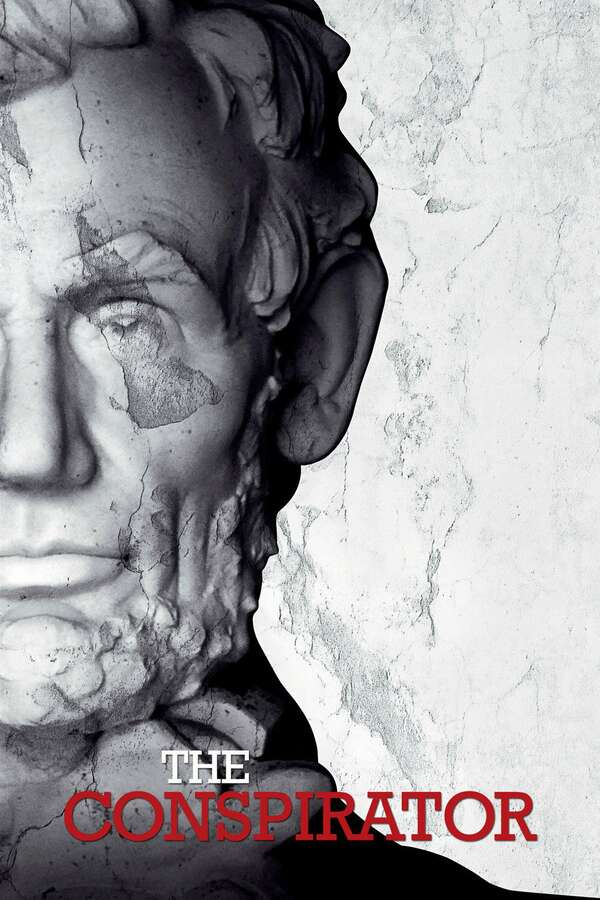
The Conspirator is a historical courtroom drama directed by Robert Redford that explores the turbulent aftermath of President Abraham Lincoln's assassination through Mary Surratt's trial.
Washington is reeling.
Lincoln has been murdered, the country is demanding justice, and those suspected of helping John Wilkes Booth are rapidly rounded up.
Among them is Mary Surratt.
She owns the boarding house where Booth and other conspirators met, and the government accuses her of participating in the plot that resulted in Lincoln's death.
Few people want to hear her defence.
Frederick Aiken certainly isn't.
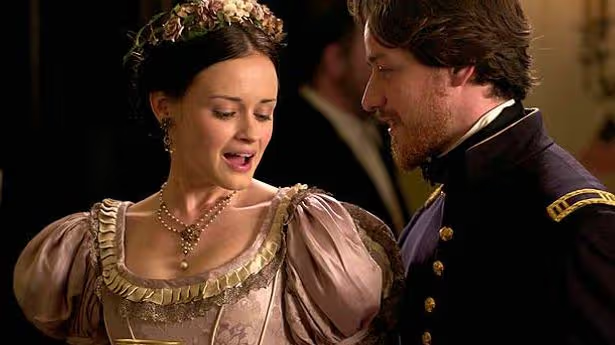
A young Union war veteran turned lawyer, Aiken reluctantly agrees to represent Surratt before a military tribunal.
At first, he shares much of the country's anger.
But the deeper Aiken investigates the government's case, the less comfortable he becomes with what he sees.
Mary's fugitive son, John Surratt, is still missing.
And Aiken begins to suspect that the mother sitting on trial may also be serving another purpose:
Pressure to bring her son out of hiding.
THE ACCUSED
Mary Surratt Has Already Been Judged
Mary Surratt enters the courtroom carrying something more dangerous than the government's evidence against her.
She carries the anger of an entire country.
Abraham Lincoln has been murdered just as America is emerging from the Civil War, and the demand for punishment is enormous.
Mary's connection to John Wilkes Booth makes her an obvious target for that anger.
Her boarding house was used by people involved in the conspiracy.
Her son is missing.
To many Americans, that's enough.
But The Conspirator isn't primarily interested in whether Mary looks suspicious.
It's interested in what should happen when suspicion becomes certainty before a trial has even begun.
FREDERICK AIKEN
Defending Her Doesn't Mean Believing Her
Frederick Aiken doesn't begin Mary's defence as a crusader convinced she's innocent.
That's precisely why his journey matters.
He's a Union veteran.
Lincoln was his president.
The men accused of participating in the assassination aren't people Aiken naturally wants to protect.
But the law requires something different.
It requires him to look at the evidence.
As Aiken begins challenging witnesses and examining the government's case, his responsibility to Mary gradually outweighs his personal feelings about her.
The question changes.
It isn't whether he likes his client.
It isn't even whether he can prove she's innocent.
It's whether the government can prove she's guilty through a process worthy of the justice it claims to represent.
JUSTICE
What Happens When a Country Needs Someone to Blame?
The most powerful conflict in The Conspirator isn't simply between prosecution and defence.
It's between justice and vengeance.
The distinction can become dangerously small after a national tragedy.
The authorities have genuine reason to investigate Mary Surratt.
But they are also operating in a country desperate for answers, punishment and closure.
That pressure hangs over everything Aiken attempts to do.
A fair trial requires tolerating uncertainty.
It requires asking uncomfortable questions.
And sometimes it requires defending somebody the rest of society has already condemned.
Robert Redford's film uses one historical trial to explore a much broader idea:
A justice system isn't truly tested when everybody agrees.
It's tested when protecting its principles becomes unpopular.