Biography
About Steve Coogan
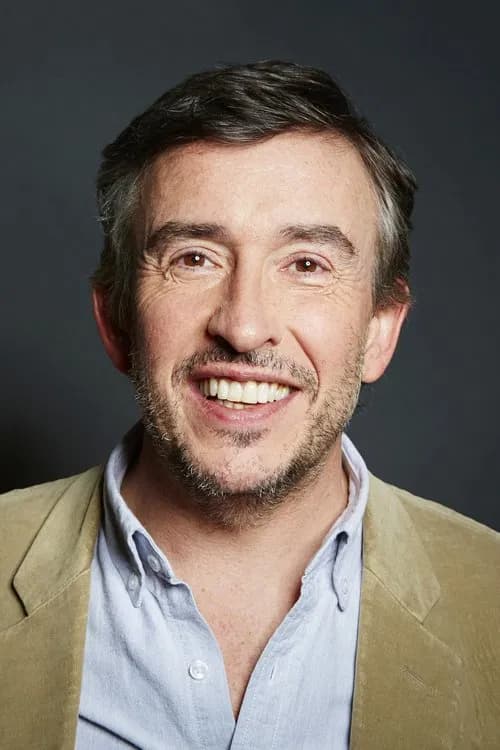
Steve Coogan has built a career on awkwardness, vanity and the uneasy gap between how people see themselves and how everyone else sees them. Born in Middleton, Lancashire, on 14 October 1965, the English actor and comedian began as an impressionist and voice artist before creating the character who would become his most persistent comic companion: Alan Partridge.
Developed with producer Armando Iannucci for the Radio 4 comedy On the Hour, Partridge grew from a parody of British sports presenters into something richer and more painfully human. Coogan carried him through radio, television, books, live shows, a podcast and the feature film Alan Partridge: Alpha Papa. The character’s inflated confidence and social ineptitude remain a natural fit for Coogan’s precise understanding of embarrassment, but Partridge is only one part of his work. His other creations include Paul and Pauline Calf, Tommy Saxondale and Tony Ferrino.
On film, Coogan has repeatedly tested the boundary between performance and persona. In Michael Winterbottom’s A Cock and Bull Story and The Trip series, he plays a fictionalised version of himself opposite Rob Brydon, using professional rivalry and wounded ego as comic fuel. He brought a different energy to 24 Hour Party People as Factory Records boss Tony Wilson, while the Night at the Museum trilogy gave him a compact comic partnership with Owen Wilson as the miniature Roman general Octavius.
Coogan’s dramatic work has shown how effectively his impatience and sharpness can shift into moral seriousness. He produced, co-wrote and co-starred in Philomena as journalist Martin Sixsmith, earning a BAFTA Award for Best Adapted Screenplay with co-writer Jeff Pope. He later played Stan Laurel opposite John C. Reilly in Stan & Ollie, receiving a BAFTA nomination for Best Actor in a Leading Role.
Alongside acting, Coogan has worked as a screenwriter and producer, co-founding Baby Cow Productions with Henry Normal in 1999. That combination of performer, writer and producer helps explain the shape of his career: character-led comedy at its centre, with plenty of room for more reflective and dramatic work around it.