Biography
About Alan Rickman
Alan Rickman brought a deep, measured voice and languid delivery to the screen, qualities that could make menace, comedy or quiet tenderness feel equally natural. Born in Acton on 21 February 1946, he first pursued visual art, studying at Chelsea College of Art and Design and the Royal College of Art before working as a graphic designer. After three years running the design studio Graphiti with friends, he changed course and trained at RADA from 1972 to 1974.
Rickman built his craft in British repertory and experimental theatre, later working with the Royal Shakespeare Company. His performance as the Vicomte de Valmont in Les Liaisons Dangereuses moved from the West End to Broadway and earned Tony and Drama Desk nominations. By the time he made his feature-film debut as Hans Gruber in Die Hard in 1988, his command of a scene was already thoroughly tested. Gruber became one of cinema’s best-known villains, although Rickman resisted being confined to that kind of role.
The range that followed proved why. He played the gleefully wicked Sheriff of Nottingham in Robin Hood: Prince of Thieves, winning a BAFTA for the performance, but also brought romantic feeling to Truly, Madly, Deeply and restraint to Colonel Brandon in Sense and Sensibility. His comic instincts found especially good outlets in Galaxy Quest, as the exasperated Alexander Dane, and Dogma, as the angel Metatron.
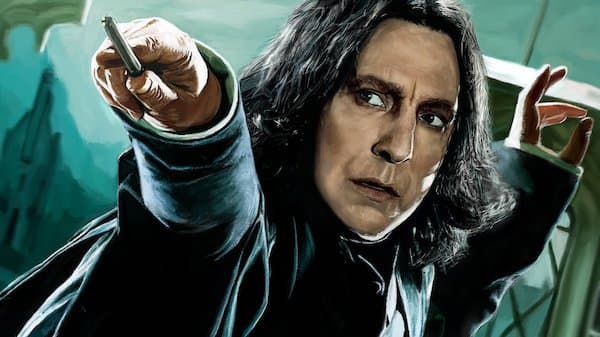
For a generation of viewers, Rickman became Severus Snape across the Harry Potter film series from 2001 to 2011. The role made full use of his ability to keep a character’s motives guarded without making him unreadable. Elsewhere, he voiced Marvin in The Hitchhiker’s Guide to the Galaxy and Absolem in Alice in Wonderland, and appeared in Love Actually, Sweeney Todd and Eye in the Sky.
Rickman also directed for stage and screen, including The Winter Guest and A Little Chaos. Whether playing a villain, romantic lead, comic actor or compromised authority figure, he was rarely hurried and never careless about the weight of a line.